
Local anaesthetic techniques
Infiltration vs blocks — which teeth, landmarks and tips.
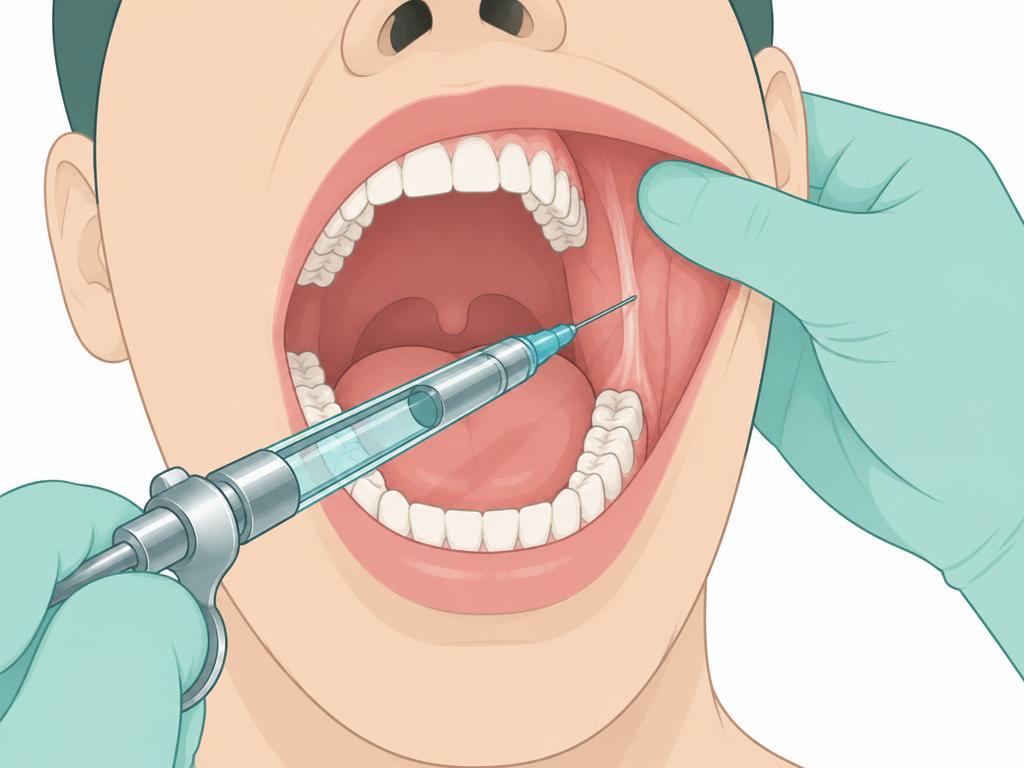
- Buccal infiltration: all maxillary teeth; mandibular incisors (articaine buccal infiltration is often effective for mandibular molars in adults).
- Inferior alveolar nerve block (IANB): mandibular molars/premolars. Thumb on the coronoid notch; insert lateral to the pterygomandibular raphe, syringe over the opposite premolars, ~1 cm above the occlusal plane; contact bone at ~20–25 mm, withdraw 1 mm, aspirate, inject slowly.
- Lingual nerve: deposit during withdrawal of the IANB.
- Long buccal: buccal soft tissue of mandibular molars.
- Mental / incisive: premolars and anteriors; mental foramen between the premolar apices.
- Palatal: greater palatine or nasopalatine; slow injection with pressure anaesthesia.
- Intraligamentary: supplementary; avoid where infection or in primary teeth with developing successors. Technique summarised from standard dental teaching — there is no single official guideline.
Sources
Checked against these sources on 2026-10-22. Guidelines change — open the source to confirm.
Summarised from the sources above. Always verify against current local guidelines and the patient's medical history.
Ask the DentaRef Assistant about this